

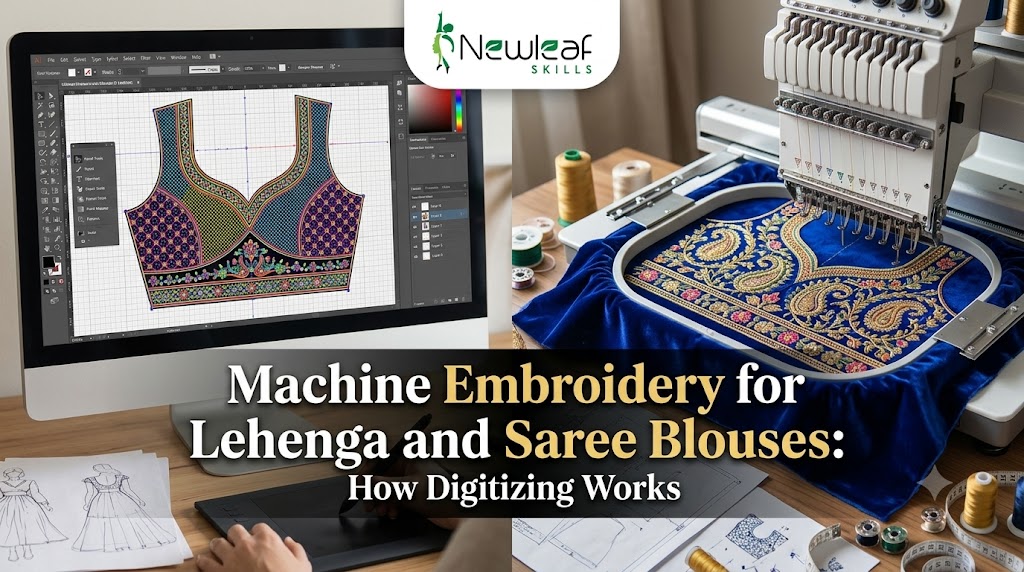
Machine Embroidery for Lehenga and Saree Blouses: How Digitizing Works
Traditional Indian outfits look even more beautiful when they feature detailed embroidery. From bridal lehengas to elegant saree blouses, embroidery adds colour, texture, and personality to every garment. Today, machine embroidery makes it possible to create intricate patterns with consistent stitching and fine detailing. But before a machine can stitch a design onto fabric, the artwork needs to be converted into a machine-readable file. This process is called embroidery digitizing.
What Is Embroidery Digitizing?
Embroidery digitizing is the process of converting an image, sketch, or artwork into instructions that an embroidery machine can follow. The digitizer decides the stitch types, direction, density, sequence, and thread colours needed to produce the final design.
For example, a floral pattern intended for a bridal lehenga requires different stitch settings from a small decorative motif on a blouse sleeve. Proper digitizing helps the machine reproduce the design accurately while keeping the fabric looking neat and attractive.
How Digitizing Works for Lehenga and Saree Blouse Designs
Creating embroidery for traditional garments involves several important steps.
1. Understanding the design
The process starts with the artwork and the garment’s requirements. The digitizer considers the size, fabric type, placement, and level of detail. Bridal outfits may require elaborate patterns, while lighter garments often benefit from delicate designs.
2. Choosing the right stitches
Different elements require different stitch techniques. Satin stitches can create clean outlines and narrow decorative details, while fill stitches work well for larger shapes. Running stitches are useful for fine lines and delicate patterns.
These decisions help bring Machine Embroidery Lehenga designs to life without making the artwork look overcrowded.
3. Adjusting density and stitch direction
Stitch density affects how closely the threads sit together. If the density is too high, the fabric may become stiff or puckered. Incorrect stitch direction can also affect the appearance of flowers, leaves, and other decorative elements.
For detailed Saree Blouses embroidery designs, these adjustments are particularly important because the patterns often include small motifs, fine borders, and intricate decorative work.
4. Testing and refining the design
Before production, the digitized file should be reviewed and, where possible, test-stitched. Adjustments may be needed to improve coverage, reduce thread breaks, or achieve a cleaner finish.
Popular Embroidery Designs for Traditional Wear
There are many ways to use machine embroidery on Indian clothing. Floral patterns, traditional motifs, decorative borders, geometric artwork, and intricate bridal designs are popular choices.
Well-planned embroidery lehenga designs can create a rich look across the skirt, while carefully positioned embroidery blouse designs can highlight the neckline, sleeves, back, or overall silhouette. The best results come from matching the design to the garment rather than simply adding more stitches.
Why Professional Digitizing Matters
Even beautiful artwork may not stitch well if the digitizing is incorrect. Professional digitizing considers fabric behaviour, stitch sequence, underlay, and design complexity. This can help improve consistency and reduce avoidable production problems.
At NewLeafSkills, our global embroidery digitizing services support customers looking for designs tailored to different garments and embroidery requirements. We also provide embroidery digitizing services USA customers can explore for custom projects. In addition to apparel designs, our offerings include custom logo embroidery services for businesses, clothing brands, and personalised products.
Final Thoughts
Machine embroidery combines creativity with technical skill. Whether you are planning bridal lehenga patterns or delicate saree blouse motifs, proper digitizing helps turn your artwork into a design that is ready for machine stitching.
Choosing the right stitch settings, fabric approach, and design placement can make a meaningful difference to the finished garment. With careful preparation and professional digitizing, traditional embroidery can achieve both beautiful detail and a consistent finish.
To learn more about embroidery digitizing and custom design services, visit NewLeafSkills